Analysis of Elementary School Teachers' Perceptions of The Implementation of Merdeka Curiculum
Oleh : Leni Zahara1, Viola Mawaddah insani2, Riri3, Maisarahtul Ispar4, Winda Rabiyatul Adawiyah5, Reni Retista6, Roni Pratama7
lenizahara@fip.unp.ac.id
Abstract
This study aims to analyze the perceptions of elementary school teachers towards the implementation of Merdeka Curriculum as an educational policy innovation in Indonesia. This curriculum is expected to be able to answer the challenges of post-pandemic education by offering flexibility, project-based learning, and an emphasis on the character of the Pancasila Student Profile. The research used a descriptive qualitative method with a literature study approach, plus field data from observations and interviews during the Real Work Lecture (KKN) at SD Negeri 04 Talang Tangah, West Sumatra. The results showed that teachers generally responded positively to the freedom in designing learning. However, implementation in the field still faces obstacles such as limited facilities, low training participation, and difficulties in integrating character values into teaching materials. In addition, there is still a gap between teachers' understanding and the delivery of materials in the training. Therefore, support is needed in the form of continuous training, equitable access to resources, and comprehensive evaluation to optimize the implementation of Merdeka Curriculum.
Keywords: Merdeka Curriculum, teacher perceptions, basic education, curriculum implementation, service learning
INTRODUCTION
The development of different times from time to time requires us to always be ready for all the changes that exist. various sectors certainly have an impact on changes, of course, this also has an impact in the field of education. Education is a very important thing in life. good quality education will produce good nation seeds as well. to create quality education, a good education system is needed, one of which is by creating a good curriculum. One of the goals of education in Indonesia is to produce a generation that is intelligent and characterized. However, an inadequate education system has offset this, so that today there are still many problems such as bullying and violence in education, even cheating also occurs (Ainia, 2020) . According to Ki Hadjar Dewantara, the principle of independence is the basis of education, which means that God Almighty has given humans the freedom to organize their own lives while following the rules of society. Students must have an independent spirit, both physically and mentally (Ainia, 2020) .
The curriculum is compiled in the hope of facilitating the course of the educational process. the curriculum comes with the hope of solving problems and answering questions in everyday life. with that, the curriculum must be flexible to adjust to existing conditions and situations. In the curriculum there is a development process which generally consists of
planning, implementation and evaluation. This development process aims to create an effective curriculum (Wahyudin, Lisdiana Kania, Solehuddin, Alya Arthamevia, Eptina, 2024) .
Before being implemented in learning activities, a research and review is needed by policy makers. the curriculum comes with the suitability of the conditions that exist in this country which will be poured in the form of learning materials and learning methods. therefore, planners and curriculum development compile lesson plans and determine models and organize appropriate learning strategies to be applied in Teaching and Learning Activities (KBM). according to Miller and Seller (1985) in Yunita's research, it is stated that when the curriculum is implemented innovation must be considered to be included in the development of a curriculum (Ramadan & Imam Tabroni, 2022) .
Not a few managers of educational units argue that the curriculum is just a collection of subjects and teaching techniques given to students. this has the impact of a lack of innovation and creation on teaching and learning activities. in this case the Ministry of Education, Culture, Research and Technology made a new innovation, namely the independent curriculum (Djusar et al., 2023) . The focus of independent learning is the freedom to think creatively and independently. It also provides opportunities for students to learn in a relaxed, calm, unpressured, and joyful manner without stress (Ramadan & Imam Tabroni, 2022)
the independent curriculum has many names including, namely, the prototype curriculum, the new paradigm curriculum and the 2022 curriculum according to the year the curriculum was issued (Mulyasa, 2023) . this curriculum comes after covid-19 which makes activities completely paralyzed. this curriculum is a combination of the 2013 curriculum adapted to post-pandemic conditions because, these conditions require a new innovation and adjustment to new conditions so that an independent curriculum emerges. The independent curriculum has been implemented at all levels of education starting from elementary school to high school. the independent curriculum has many differences from the previous curriculum, including project-based, learning flexibility, and focusing on essential material, besides that, quoted from the Ministry of Education and Culture's website, the independent curriculum has a Pancasila Student Profile (PPP) structure (Mulyasa, 2023) .
perception is a process that combines and organizes sensory data (sensing) to be developed in such a way that we can be aware of our surroundings, including being aware of ourselves (Nisa et al., 2023) . Sabarini in her research also stated that the impression of a picture or response that a person has after the person absorbs to know some things (objects), through the five senses (Sri Santoso Sabarini, Hanik Liskustyawati, Sunardi, Budhi Satyawan, Djoko Nugroho, 2021) . the assessment of the implementation of the independent curriculum can vary both by each individual and agency depending on the situation and conditions that exist in each school. the independent curriculum has the characteristic of "having freedom" in this case includes freedom in finding learning resources and also freedom in learning methods. The Minister of Education and Culture initiated the independence of developmental learning to face society 5.0 (Mantra et al., 2022) . in this study, conducted in one of the schools in West Sumatra during the activities of the Real Work Lecture (KKN) for one month.
Real Work Lecture (KKN) is an intracurricular activity carried out by the university with the aim that students are able to implement the learning gained in real social life. the
regulations regarding this regulation have been compiled in the legislation, namely in the Law of the Republic of Indonesia Year 2003 concerning the National Education System Article 20 Paragraph 2 which states that "Higher education has the autonomy to manage its own institutions as centers for higher education, scientific research and community service" (Syardiansah, 2019) . There are many benefits from this activity, namely in research conducted by Dina Kusniah in 2017 explaining that with the existence of KKN students become have several personal personality developments, namely a steady and stable personality, adult personality, wise personality, authoritative personality, and also a noble moral personality (Khusniah, 2017) . The real work course is expected to help students become better at handling problems and broaden their horizons. Therefore, the real work course contributes to the overall improvement of students' competencies and can also provide additional benefits to the community where the real work course is conducted. Many studies have examined the independent curriculum regarding its implementation and benefits. However, the focus of this research is on teachers' perceptions of the implementation of the independent curriculum in learning.
RESEARCH METHOD
This research uses a literature study approach with a descriptive qualitative method, to analyze teacher perceptions of the implementation of the Independent Curriculum based on secondary data obtained from various previous studies and also observations during Real Work Lecture (KKN) activities at SD N 04 Talang Tangah Kab. Talang Tangah, West Sumatra. the subjects in this study were the teachers there to examine the teacher's understanding of the implementation of the independent curriculum at SD N 04 Talang Tangah.
Data collection was carried out for one month from June-July 2025. data collection was carried out by means of interviews, observations in the field, and also literacy studies in journals and previous research. Literacy studies refer to journals, books, and other documents that are certain of their validity. all data is collected systematically and reviewed descriptively to get a depiction of the results of the research that has been done.
RESULTS AND DISCUSSION
George Herbert Mead (2015) in his research states that social processes begin objectively and focus on social communication between individuals through the medium of verbal cues. KKN can help students gain practical abilities to deal with the social problems of society (Syardiansah, 2019) . it is certainly in line with the goal that a student is required to be able to think critically and also make innovations and creations regarding solving existing problems. KKN is an activity that helps encourage students to be able to carry out social interactions, live in society, help fix existing problems in the area in accordance with the applicable portions and rules. one of the existing problems is the development of the times which has a major effect on various sectors in the world, including the State of Indonesia. one of the factors affected by the digital era and the development of this era is the education sector. one of the main foundations in the development of education and producing a quality education system is the preparation of the right curriculum.
Etymologically, the curriculum comes from the Greek language, namely curir which means runner and curare which means a racing place. besides according to etymology there are also several pendaat experts on the curriculum including the definition of curriculum according to S.Nasution in Prasetyo & Hamami's research, namely a strategy for starting education under the guidance and responsibility of schools or educational institutions and teachers (Prasetyo & Hamami, 2020) . Meanwhile, according to Zaenal Arifin in his research, the definition of curriculum serves as one of the tools to achieve educational goals and serves as a guide for teaching at all types and levels of education. curriculum development in Indonesia has been recorded in history.
The curriculum is a major factor in the success of an educational process in education units. curriculum training for educators, namely teachers, is very important. because, with the ever-changing curriculum changes, training is needed for teachers so that teachers are more proficient and comprehensive so that a quality learning process is carried out. the quality of a quality and quality curriculum will produce good output as well. Curriculum changes that occur in Indonesia are not merely changed without considering the principles of curriculum development. These principles are: (1) the principle of relevance, (2) the principle of flexibility,
(3) the principle of continuity, (4) the principle of efficiency, and (5) the principle of effectiveness (Prasetyo & Hamami, 2020) .
Based on research conducted by Mantra in 2022, there are several teacher narrations regarding the implementation of the independent curriculum. based on the teacher's narrative, it is explained that they want to learn and get to know and learn more about the systematics of the independent curriculum so that they can apply it to learning optimally. (Mantra et al., 2022)
. In the process of developing and implementing the curriculum in schools, teachers play the most important role. with their knowledge, experience, and competence, teachers are at the center of efforts to develop a curriculum. with the important role of a teacher as the main foundation in developing a curriculum, the development team must consider the opinion of teachers as part of the environment that influences the curriculum (Mantra et al., 2022) .
According to Kottler in his research, Saputra states that perception is the process of how a person selects, organizes and interprets information that creates a meaningful conception (Saputra & Hadi, 2022) . obtained the results of an interview with the question "What are your views on the flexibility and freedom offered by the Merdeka Curriculum in planning and implementing learning in the classroom?" to teachers of grades 1-6 of primary school." to teachers of grades 1-6 of Public Elementary School 04 Talang Tangah, the same results were obtained that teachers feel they have the freedom to express ideas in learning and are able to determine what ideas and methods will be used during learning activities. Then, a question was given again "What are the main challenges you face in implementing the Merdeka Curriculum, especially in the context of student readiness, school support, and available resources?" the answer to this question is very varied, namely the teacher stated that for the most difficult part of implementing the independent curriculum, namely the use of creative ideas so that it requires a lot of money, of course. However, the facts on the ground show that school funds are insufficient if required to make continuous learning media which requires spending a lot of money, and also constrained by technology. for teachers who are elderly where they find it difficult to operate laptops and also the latest technologies so they prefer to write, print learning media or concrete media.
According to research conducted by Yunita (2025) regarding the perceptions of teachers and principals at Sd Negeri Kuasaet, Kupang City. gives his perception regarding the implementation of the independent curriculum, namely Both teachers and principals realize that the Merdeka Curriculum requires better teacher abilities, especially in terms of creativity, use of technology, and flexible lesson planning. "If K13 we just follow the book, now we have to compile our own with references from various sources," said one teacher. This change is challenging, especially for teachers who are new to new approaches and the use of digital platforms (Yunita Veronika, Taty R. Koroh, 2025) . of course, one of the challenges in implementing the independent curriculum is technology. the equitable distribution of regional development in Indonesia should be a special concern for the government because there are still many areas that are left behind so that, the lack of maximum results such as technology training, networks, and so on that support the running of the independent curriculum extension both for teachers and teachers to students.
Teachers and principals at SD Negeri Kuasaet agree that the Merdeka Curriculum has many advantages, mainly because it gives teachers and education units more freedom to organize learning according to student needs. This curriculum is considered more contextual, flexible and encourages teacher creativity and student independence. However, they also stated that there are some problems in implementing Merdeka Curriculum, especially related to teacher readiness, infrastructure and technical assistance. Further training is still needed for many teachers to understand the structure of the new curriculum, create teaching modules, and utilize digital platforms. "We still need assistance because we don't fully understand the flow of learning objectives and project activities," said an educator (Yunita Veronika, Taty R. Koroh, 2025) . In addition, limited infrastructure such as technological devices and internet networks are also an obstacle. Despite this, the desire to learn and adapt remains high. With the support of the government and school principals, this curriculum can be implemented well.
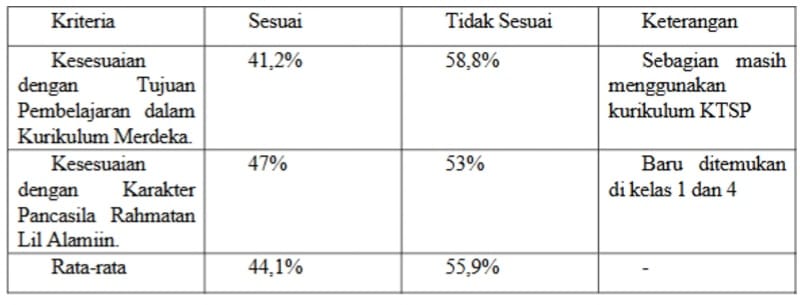
Table1 . Sample Teaching Module
Source: (Athifah Muzharifah et al., 2023)
The results show that 44.1% of teachers have adapted teaching modules to the Merdeka Curriculum and Pancasila Character, and 55.9% have not done so. Therefore, to improve teachers' ability to plan lessons according to the situation, needs, and characteristics of students, it is necessary to practice preparing teaching modules and projects independently which are carried out repeatedly. in addition, the table shows that there are still teachers or educational
units that implement the 2013 curriculum (KTSP). this shows that there is a delay or unpreparedness in the transition from the old curriculum to the independent curriculum. The government or the local education office needs to conduct a more serious evaluation in the process of socialization and training of the Merdeka Curriculum, so that all teachers understand and are able to adapt learning to the new direction of the curriculum. in addition, the level of conformity to the values of Pancasila Rahmatan Lil Alamin Character is 47% appropriate and 53% not appropriate. this shows that even though character value is one of the cores in the Merdeka Curriculum, not all teachers have succeeded in integrating it fully in learning. it is even mentioned in the information that the value integration has only been found in grades 1- 4, which in grades 5 and 6 has not been properly integrated.
According to research conducted by Stephen Divan in 2023, it also explains the perceptions of teachers regarding the implementation of the independent curriculum in elementary schools, which obtained the results, namely
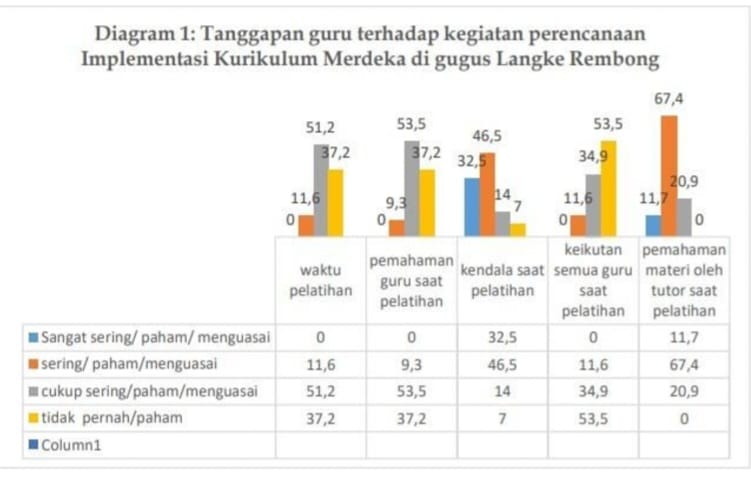
Diagram1 . Teacher Responses to Planning Activities for Implementing the Independent Curriculum in the Langke Rembong Gugus
source: (Divan & Gervasius Adam, 2023)
Diagram 1 shows that Merdeka Curriculum still faces many problems during the planning stage, especially regarding teacher training. Most teachers stated that training was held quite often (51.2 per cent), but teachers' understanding of the training materials was still low, with 37.2 per cent stating that they did not understand and only 9.3 per cent that they did understand. In addition, obstacles during training were a major problem, with 32.5% of teachers stating that they felt it very much and another 46.5% stating that they felt it quite a bit. This indicates that almost 80% of teachers experienced barriers during the training. In addition, the overall level of teacher participation in the training was low, with 53.5% of the teachers stating that they had never attended the entire training. Although the comprehension of the material by the training teachers was rated quite good (67.4% often understood the material), it did not fully affect the teachers' understanding, indicating that there is a difference between how the material was delivered and how the participants understood it. These results suggest that a thorough evaluation needs to be conducted on the effectiveness of training, delivery methods, and equitable access to training so that Merdeka Curriculum can be properly implemented.
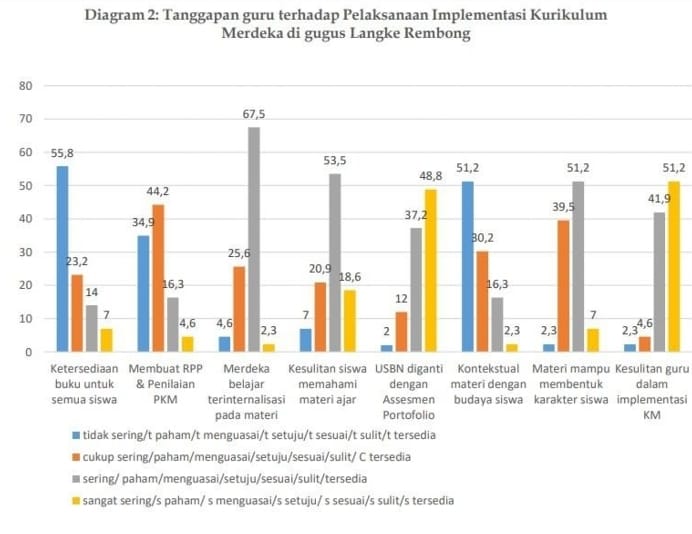
Diagram2 . Teacher Responses to the Implementation of Merdeka Curriculum Implementation in Langke Rembong Gugus
Souce: (Divan & Gervasius Adam, 2023)
In research conducted by Divan and Gervasius (2023), it also explains the implementation of the independent curriculum in elementary schools. As for the results of the study, it is explained that there are several indicators that form the basis for teachers' perceptions in assessing the implementation of the Merdeka Curriculum, namely the availability of textbooks for all students, simplification of lesson plans, ease / constraints for teachers in presenting subject matter, the principle of independence is internalized in learning materials, ease / difficulty of students in participating in the learning process, contextual material content with student culture, USBN is replaced by portfolio assessment, and the material is able to shape student character (Divan & Gervasius Adam, 2023) .
Based on Diagram 2, teachers' responses to the implementation of Merdeka Curriculum implementation in the Langke Rembong cluster show that in general there are still various challenges in the implementation process in the field. First, in terms of the availability of books for students, 55.8% of teachers stated that books were not available, only 23.2% considered books to be quite available, and the rest were divided between available and very available. This indicates a problem with the distribution or procurement of textbooks. Furthermore, in making lesson plans and assessing the Pancasila Student Profile Strengthening Project (PKM), 44.2% of teachers feel quite capable of making them, but 34.9% still have difficulties, and only 4.6% feel very capable, reflecting the need for more intensive technical training. For the aspect of internalizing Merdeka Belajar values, the majority of teachers (67.5%) find it difficult to relate them to teaching materials, and only 2.3% strongly agree that these values have been successfully internalized, indicating that the philosophical values of Merdeka Curriculum have not been fully understood thoroughly.
Then, 53.5% of teachers stated that students had difficulty understanding the teaching material, indicating a challenge in adjusting the material to students' abilities. Regarding the replacement of USBN with portfolio assessment, 48.8% agreed, while 37.2% moderately agreed, indicating the majority of teachers' support for a more flexible and process-oriented assessment method. The aspect of contextualizing the material with students' culture received a relatively positive response, with 51.2% of teachers agreeing that the material was in accordance with the cultural context, while 30.2% moderately agreed. However, regarding the material's ability to shape students' character, only 39.5% agreed, with the other 52.3% feeling doubtful or only moderately agreed, which could indicate that the application of character values is still not optimal. Finally, in terms of teachers' difficulties in implementing the Merdeka Curriculum, 51.2% of teachers stated that they experienced difficulties, with 41.9% experiencing moderate difficulties, underlining that this implementation has not gone smoothly at the teacher level, both technically and conceptually. Overall, this data shows that although there are several aspects that teachers have begun to accept, there is still a need to increase understanding, training, and support for facilities and infrastructure to optimize the implementation of the Merdeka Curriculum.
From the results of interviews with teachers at SD N 04 Talang Tangah and also the results of a literature review from previous studies such as research (Divan & Gervasius Adam, 2023) and also (Athifah Muzharifah et al., 2023) explains that the implementation of learning using the independent curriculum does need to be reviewed and also needs supervision and attention from related parties or institutions. especially regarding training for teachers to implement the independent curriculum in the classroom so that teachers as one of the means in the advancement of education in Indonesia can be maximally achieved. cooperation with all related institutions is certainly needed such as training and provision of maximum facilities and infrastructure for optimal results.
CONCLUSION
Based on the results of research and analysis of primary school teachers' perceptions of the implementation of Merdeka Curriculum, it can be concluded that teachers generally think that flexibility and freedom are good things. Teachers have more freedom to adapt learning concepts and approaches to student needs. Nevertheless, there are many major problems that still hinder the implementation of Merdeka Curriculum in the field, including the lack of supporting resources such as textbooks and technology, students' lack of understanding of the subject matter, and the lack of training provided by teachers.
In addition, Pancasila character values have not been fully incorporated into lessons, especially in the upper grades. It is crucial to conduct a thorough assessment of the effectiveness of the training methods as there are differences between the material delivered by the training tutors and the material understood by teachers. Other key barriers include teachers struggling to adopt new methods, limited funding, and older teachers who lack digital literacy. As a result, the government should continue to support Merdeka Curriculum in the form of continuous training, provision of adequate resources, and improving cooperation between schools, teachers, and other stakeholders
LITERATURE
Ainia, D. K. (2020). Merdeka Belajar in Ki Hadjar Dewantara's View and Its Relevance for Character Education Development. Indonesian Journal of Philosophy,3 (3), 95-101. https://ejournal.undiksha.ac.id/index.php/JFI/article/view/24525/16362
Athifah Muzharifah, Irfa Ma'alina, Puji Istianah, & Yusmandita Nafa Lutfiah. (2023).
Teacher Perceptions of the Implementation of the Merdeka Curriculum at Madrasah Ibtidaiyah Walisongo Kranji 01 Kedungwuni. Concept: Journal of Social Humanities and Education,2 (2), 161-184. https://doi.org/10.55606/concept.v2i2.306
Divan, S., & Gervasius Adam. (2023). Teachers' Perceptions in the Langke Rembong Cluster towards the Implementation of the Merdeka Curriculum in Elementary Schools. Journal of Elementaria Edukasia,6 (4), 1580-1596. https://doi.org/10.31949/jee.v6i4.7152
Djusar, S., Asril, E., & Vebby. (2023). Etraining of Erapor Management of Education Based on the Independent Curriculum for the 2nd Batch of Movers School at the Smp Level in Pangkalan Kerinci District. J-COSCIS: Journal of Computer Science Community Service,3 (2), 135-141. https://doi.org/10.31849/jcoscis.v3i2.13073
Khusniah, D. (2017). Study of the Development of Social Competence and Personality Competence through the Real Work Lecture Program (KKN) on Prospective Pai Teacher Students of UIN Walisongo Semarang Academic Year 2016/2017.
Postgraduate Program of IAIN Salatiga, 91.
Mantra, I. B. N., Pramerta, I. G. P. A., Arsana, A. A. P., Puspadewi, K. R., and Wedasuwari,
I. A. M. (2022). Teachers' perceptions of the importance of training in developing and implementing an independent curriculum. Journal of Research Innovation, 3(5), 6313– 6318.
Mulyasa, H.. (2023). Implementation of the Independent Curriculum (A. Ulinnuha (ed.); first). PT Bumi Aksara. https://books.google.co.id/books?id=ec_hEAAAQBAJ&lpg=PP1&ots=U7jhWhK- f4&dq=implementasi independent curriculum&lr&hl=id&pg=PP1#v=onepage&q=implementation of independent curriculum&f=false
Nisa, A. H., Hasna, H., & Yarni, L. (2023). Perception. Koloni,2 (4), 213-226. https://doi.org/10.31004/koloni.v2i4.568
Prasetyo, A. R., & Hamami, T. (2020). Principles in Curriculum Development. Palapa,8 (1), 42-55. https://doi.org/10.36088/palapa.v8i1.692
Ramadan, F., & Imam Tabroni. (2022). Implementation of independent learning curriculum.
Jambura Journal of Educational Management,13 (2), 66-69. https://doi.org/0.15642/jkpi.2022.12.60.-71
Saputra, D. W., & Hadi, M. S. (2022). Perceptions of North Jakarta and Thousand Islands Elementary School Teachers About the Merdeka Curriculum. Holistika Journal,6 (1),
28. https://doi.org/10.24853/holistika.6.1.28-33
Sri Santoso Sabarini, Hanik Liskustyawati, Sunardi, Budhi Satyawan, Djoko Nugroho, B. N.
P. (2021). Perceptions and Experiences of Academic Sports Lecturers Implementing E- Learning during the Covid-19 Pandemic (first). CV Budi Utama. https://books.google.co.id/books?id=DxZSEQAAQBAJ&lpg=PP1&ots=Nt1sUMyAfZ
&dq=Persepsi And Academic Experience of Sport Lecturers Implementing E-Learning During the Covid-19 Pandemic&lr&hl=id&pg=PA1#v=onepage&q=Perception And Academic Experience of Sport Lecturers Implementing E-Learning During the Covid-19 Pandemic.
Syardiansah, S. (2019). The Role of Real Work Lectures as Part of Student Competency Development. JIM UPB (Scientific Journal of Management, Putera University Batam),7 (1), 57-68. https://doi.org/10.33884/jimupb.v7i1.915
Wahyudin, Lisdiana Kania, Solehuddin, Alya Arthamevia, Eptina, F. (2024). Independent Curriculum: Solution or cause of students' lack of soft skills? 4, 250–261.
Yunita Veronika, Taty R. Koroh, V. R. B. (2025). TEACHERS' PERCEPTIONS OF THE IMPLEMENTATION OF THE INDEPENDENT CURRICULUM IN THE CONTEXT OF ELEMENTARY SCHOOL TEACHER EDUCATION IN THE PUBLIC ELEMENTARY SCHOOL KUASAET KUPANG CITY. SINERGI, 2(6), 2846–2859.